Posts

Showing posts with the label Hiranandani Hospital Kidney

Dr. Sujit Chatterjee Hiranandani Hospital: What should you do if you get the flu for the first time?

Image
Some of the early signs of the flu include a tiny tickling in your throat, body aches, and a rapid fever. Each year, the influenza virus (also known as the flu) affects up to 20% of the population in the United States. It’s critical that you detect the signs as soon as possible so that you can begin to take care of yourself. You should go to  Hiranandani Hospital Kidney Transplant   for all kinds of treatments. Young children, older individuals, pregnant women, and people with disorders that compromise their respiratory or immunological systems should seek medical help as soon as possible. Recognizing the flu's symptoms At first, it's easy to mistake the flu for a slight cold. The flu is quite similar to the common cold and also shares many of the same symptoms, the flu's symptoms are usually more severe and appear sooner. The flu's early symptoms include: • fatigue • a high-temperature fever (typically exceeding 100°F [38°C]) • a scratchy or painful throat • cough • ch...
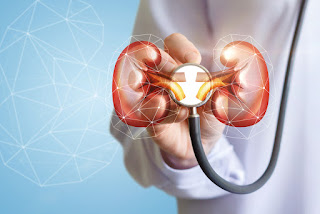
Hiranandani hospital Powai: How should you keep your kidneys and heart healthy?

Image
   The most common cause of death among persons with CKD is heart disease. He goes on to say that understanding the disease can help you find strategies to live a healthy life for the rest of your life. According to  Hiranandani hospital  Powai , kidney disease indicates that the kidneys have been damaged and are no longer capable of filtering the blood. And this harm might lead to the accumulation of wastes in the body. When it comes to heart disease, the problem arises when blood clots block the flow of blood to the heart and plaque forms near the blood vessel walls. Diabetes and high blood pressure, according to  Hiranandani Hospital Kidney , are inextricably linked disorders. It is also past time for you to protect and care for your kidneys. Because those with diabetes, high blood pressure, heart illness, and a family member who has had renal failure in the past are more prone to develop kidney disease. Following are the tips to protect your kidneys and hear...

What are some common habits that can harm your kidneys?

Image
Your kidneys play a crucial part in the overall health of your body. They aid in the removal of waste and excess fluid from the body. They also eliminate acid to keep the water, salts, and minerals in the body in a healthy equilibrium, says Dr. Sujit Chatterjee Hiranandani Hospital . Your neurons, muscles, and other body tissues may begin to malfunction if you don't maintain a healthy balance. As a result, it's critical to keep your kidneys in good shape.  The following are some frequent habits that may be hurting your kidneys without your knowledge. Consumption of a Vitamin-Deficient Diet Certain vitamins are beneficial to your kidneys, and a deficiency can cause damage. Vitamin D deficiency has been discovered in people with kidney disease. Vitamin B6 is also proven to help maintain your kidneys healthy when taken with other drugs. Vitamin D can be obtained by sitting in the sun for 10-15 minutes each day. Vitamin B6 can be found in salmon, chickpeas, potatoes, and other star...

How to take care of your kidneys by Dr. Sujit Chatterjee from L H Hiranandani Hospital Kidney

Image
Kidney disease is a significant public health issue. Kidney diseases are difficult to trace until it has progressed to an advanced stage. In such cases, Hiranandani hospital kidney transplant treatments or dialysis are performed.  The main motive is to detect kidney disease before it becomes a problem. It is essential for everyone to go for regular testing especially those who are at risk or in critical condition.  Chronic Kidney Disease might become incurable at times, necessitating additional care and attention for the diseased patient. Kidney illnesses are notoriously difficult to diagnose.  According to experts like Dr. Sujit Chatterjee Hiranandani Hospital , kidney function might decline in more than 80% of instances without causing any symptoms. Early indications and symptoms of chronic renal disease are absent. The experts suggest that you take the initiative and assess if you are at risk for CKD. To be safe and preventive, have a simple kidney te...

4 ways to set yourself up for better sleep as Highly Sensitive People (HSP)

Image
   According to Hiranandani Hospital Powai News , sleeping is one of the few activities that all humans share. It's built into our biology, which is why the vast majority of us spend roughly one-third of our lives sleeping. Sleep, however, is more than just a necessity. It's a magical elixir, especially for those who are overly sensitive (HSPs). HSPs may require more sleep than others because they are easily overwhelmed. Sleep rejuvenates our bodies and minds, preparing us for the remaining two-thirds of our lives. Why Is Sleep Important for HSPs? Of course, whether you're an HSP or not, getting enough sleep is essential for everyone. Sleep promotes healthy brain function by forming new neural pathways that aid in learning and memory. Sleep deprivation has been linked to a lack of emotional control. If you're an HSP who perceives the world at heightened levels, getting enough sleep is essential for processing all of the information you take in during the day. Those who ...

Understanding the Timelines For Kidney Failure And Related Treatment

Due to the global burden of diseases, Kidney disease is one of the leading causes of disability, morbidity, and mortality in India. Every one in ten people is suffering from ESRD (End-stage Renal Disorder). With the increase in the number of patients with chronic disease , it becomes quite essential for people to adopt a healthy lifestyle. Along with the knowledge of timelines related to kidney transplants, awareness about serious kidney diseases is also essential. For better quality of life, awareness and knowledge about severe kidney diseases and related treatment is a must. Ignoring the calls and symptoms can put you in a highly risky condition.  For most patients, a kidney transplant is the only cure and in such a situation you need to take utmost care of your health. To make the kidney transplantation process easily understandable for you, we are listing some pointers over here. Working of Kidney The kidney is a very important part of the body because all the waste and extra f...

Hiranandani Hospital- The Pioneers In Kidney Disease Treatment

  Hiranandani Hospital in Powai is a famous multi-specialty health center of Mumbai, known for its phenomenal services, outstanding doctors, and advanced equipment. Their contributions in the field of medical science have been remarkable. With experts, senior nephrologists, and urologists the nephrology department is voluntarily serving humanity. Taking care of bean-shaped organs is the only priority on which the entire team works. Nephrology stands for the medical branch associated with kidney care, functions, and diseases. According to National Kidney Foundation, it is found that in people aged 65 through 74 globally, one in five men, and one in four women are suffering from Chronic Kidney Disease (CKD). From the stated fact, one can realize how important it is to take care of our kidneys. Kidneys are a pair of complex organs that functions every day and make your health perfect. These pair of organs work regularly and balance the electrolytes, remove wastes, and control body fl...

Kidney Transplantation: The Things You Need To Know About The Treatment

  A kidney transplant is a major operation in which a patient with kidney disease receives a new kidney from a living or deceased donor. When kidneys lose their ability to filter, dangerous amounts of fluid and waste build up in your body, increasing your blood pressure and leading to kidney failure (end-stage renal disorder). When the kidneys lose about 90% of their ability to act normally, it is called end-stage renal disease. Kidney failure can be caused   by a variety of diseases and conditions. Nearly 60% of  chronic kidney disease  and end-stage renal disease cases in India are due to complications from lifestyle diseases such as diabetes and hypertension. However, India has one of the highest success rates in the world for kidney transplants. The success rate for a  kidney transplant  is influenced by a number of factors, including the hospital chosen, surgical and post-operative treatment team experience, tissue matching and viability of the donor, ...